

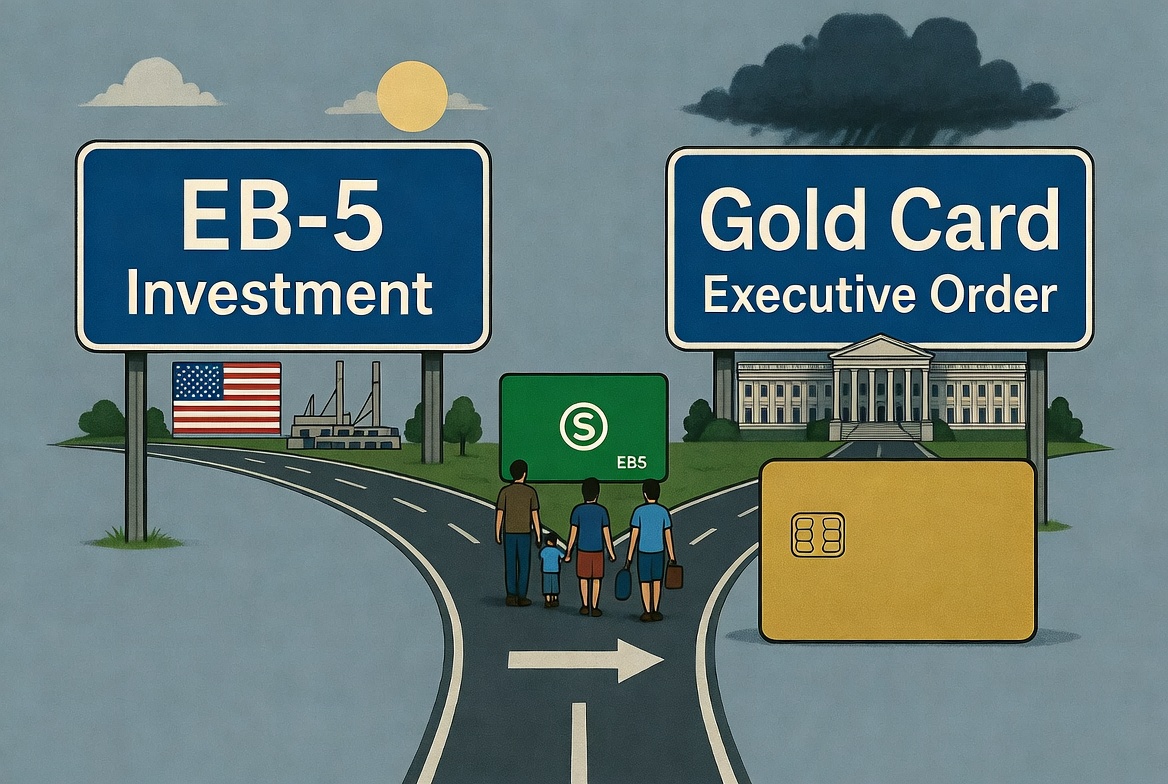
The United States has recently introduced a new “Gold Card” residency option for wealthy foreign nationals.
The program has quickly attracted attention among global investors who are evaluating immigration options to the United States. At first glance, the Gold Card may appear similar to the long-standing EB-5 Immigrant Investor Program, which also provides a pathway to U.S. permanent residency through capital.
However, the two programs differ significantly in structure, legal foundation, and long-term predictability.
Now that the Gold Card program is live, one of the most important questions investors should consider is how the program fits within the broader U.S. immigration framework and what its long-term policy trajectory may look like.
EB-5: A Long-Standing Program Established by Congress
The EB-5 Immigrant Investor Program was created by Congress in 1990 as part of the Immigration and Nationality Act.
The program allows foreign investors to obtain U.S. permanent residency by investing in businesses that create jobs for American workers.
Under the EB-5 Reform and Integrity Act of 2022, investors typically invest:
- $800,000 in targeted employment area projects, including rural investments.
Unlike many “golden visa” programs globally, EB-5 capital is not a donation to the government. Instead, the capital is invested into real businesses that generate economic activity and job creation.
In most EB-5 projects, investor funds are structured as a loan or equity investment, meaning the capital may be repaid after the investment period if the project performs successfully.
Because EB-5 was created through Congressional legislation, changes to the program typically require new legislation passed by Congress and signed by the President.
This legislative foundation has helped make EB-5 a stable component of the U.S. immigration system for more than three decades.
The U.S. Gold Card: A Different Structure
The newly introduced U.S. Gold Card program takes a different approach.
Instead of investing capital into job-creating businesses, the Gold Card appears to involve a large direct payment to the U.S. government in exchange for residency rights.
In other words, the Gold Card functions more like a direct payment model, whereas EB-5 is structured as an investment program tied to job creation.
This difference in structure is important for investors evaluating how their capital is used.
| Feature | EB-5 Program | U.S. Gold Card |
|---|---|---|
| Capital structure | Investment in U.S. businesses | Direct payment |
| Capital return | Possible | No investment return |
| Job creation | Required | Not required |
| Legal framework | Congressional legislation | Administrative program |
Policy Stability and Future Considerations
Another difference between the two programs relates to how they were introduced into the U.S. immigration system.
The EB-5 program is written into federal law and has been modified periodically through legislation.
The Gold Card program, by contrast, was introduced through administrative policy rather than through a new act of Congress.
Programs introduced through administrative authority can evolve over time depending on how future administrations interpret or adjust immigration policy.
This does not necessarily mean the program will change, but it does mean that its long-term policy trajectory will likely depend on future political and legislative developments.
For investors making long-term immigration plans, understanding how a program is established within the legal system can be an important factor.
Family Immigration
Another key consideration is how each program treats family members.
Under the EB-5 program, U.S. immigration law clearly provides permanent residency for:
- The investor
- The investor’s spouse
- Unmarried children under age 21
Because the Gold Card program is new, the exact details regarding family eligibility and implementation procedures are still being clarified.
Investors evaluating the program may want to review the most current policy guidance to understand how family members are treated under the framework.
Investment vs Payment
For many investors, the most practical difference between the two programs is financial.
EB-5 capital is invested into American businesses and may be repaid depending on project performance.
The Gold Card program appears to involve a one-time payment rather than an investment, meaning there is no expectation of capital return.
For investors who prefer their immigration strategy to also function as an investment, this distinction may be significant.
Conclusion
The launch of the U.S. Gold Card program adds a new option to the landscape of investment-related immigration pathways.
However, investors comparing the Gold Card with EB-5 should understand that the two programs are fundamentally different in several important ways:
- EB-5 is an investment program, while the Gold Card is structured as a direct payment
- EB-5 capital may be repaid, while Gold Card payments are not investments
- EB-5 is established through Congressional legislation, while the Gold Card was introduced through administrative policy
- EB-5 has a 30-year track record, while the Gold Card is a newly introduced program
For investors evaluating long-term immigration strategies, understanding the structure and legal foundation of each program can help inform the decision about which pathway best aligns with their goals.
Potentially, yes. If the proposed Gold Card program is created through executive action or administrative authority rather than an act of Congress, a future president could modify, suspend, or eliminate the program. Immigration policies introduced through executive authority are often revisited or reversed when a new administration takes office.
The EB-5 program requires investors to invest capital into job-creating U.S. businesses, and the investment may be repaid depending on the project’s performance. The proposed Gold Card concept appears to involve a large direct payment to the government, which functions more like a donation rather than an investment.
Yes. Under the EB-5 program, permanent residency is available for the investor, their spouse, and unmarried children under the age of 21. Because the proposed Gold Card program has not yet been formally enacted through legislation, the exact rules regarding eligibility for family members remain unclear.
