
EB-5 Program Overview
EB-5 Data
EB-5 News
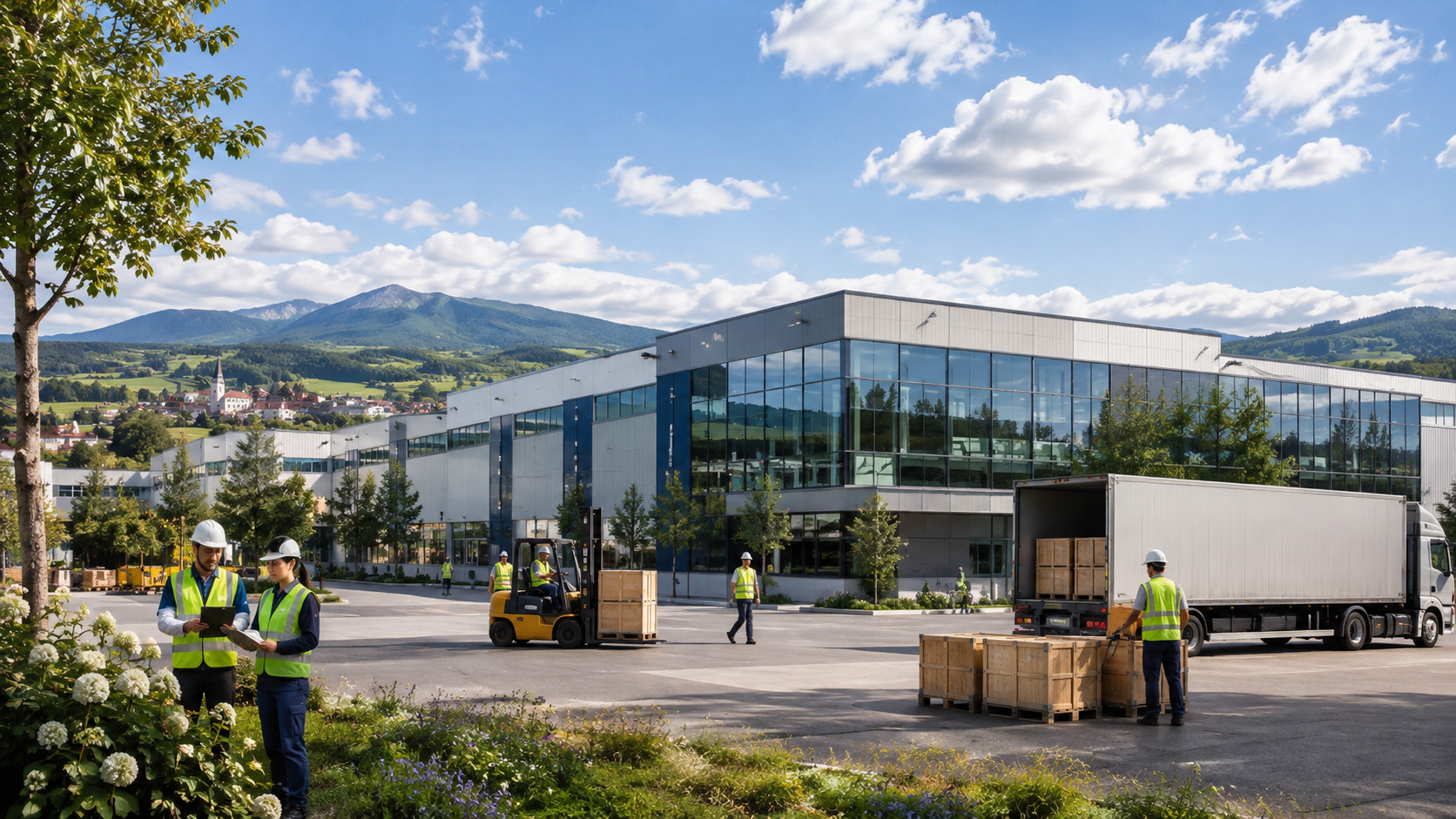

Rural EB-5 investments have attracted significant attention since the EB-5 Reform and Integrity Act of 2022 (RIA) introduced a 20% visa set-aside for qualifying rural projects. For many investors, the appeal is straightforward: access to the $800,000 minimum investment threshold, reserved visa availability, and priority processing of qualifying I-526E petitions.
Historically, much of the rural EB-5 market has centered on real estate development, including hotels, residential communities, and mixed-use properties. Manufacturing projects, however, offer a different investment model—one built around production capacity, customer demand, ongoing business operations, and often substantial physical assets including land, purpose-built facilities, equipment, inventory, and infrastructure.
But a growing number of rural EB-5 projects now involve manufacturing operations. This distinction matters.
Manufacturing and real estate are structurally different businesses, and they carry different risk profiles for EB-5 investors. Understanding where those differences emerge across job creation, capital structure, revenue durability, and repayment pathways is essential for any investor comparing rural project options in 2026.
Rural designation is not a measure of investment safety. It determines geographic eligibility for certain EB-5 benefits, not the financial strength of the project.
Job creation follows different economic models. Real estate projects often generate substantial employment through construction, while manufacturing projects can benefit from a more balanced combination of construction-phase jobs and continuing operational employment.
Capital protection depends on the underlying assets. Real estate may offer property-based collateral, while manufacturing may combine real property and purpose-built facilities with equipment, inventory, receivables, and other productive business assets.
Revenue risk is industry-specific. Manufacturing depends on production, customers, and operating margins; real estate depends on property demand, occupancy, leasing, or sales.
Repayment strategies require independent scrutiny. Neither a projected refinancing nor anticipated operating cash flow guarantees that EB-5 capital will be returned.
Under the RIA, a rural TEA is defined as an area outside any Metropolitan Statistical Area and outside any city or town with a population of 20,000 or more. Projects in these areas qualify for the reduced EB-5 investment threshold of $800,000 and receive priority processing from USCIS on I-526E petitions.
These immigration-level benefits are significant. Priority processing can reduce petition review times to months rather than years. Reserved visa set-asides mean investors in rural projects draw from a separate allocation, currently avoiding the backlogs that affect unreserved EB-5 categories for investors from India and China.
However, rural designation is a geographic classification. It tells you where a rural project is located. It does not tell you whether the underlying business is well-structured, whether jobs will materialize as projected, or whether your capital has a clear path to repayment. That analysis requires examining the project itself.
This is equally true across project types. A speculative rural resort or ski development dependent on tourism, discretionary spending, and future property values may present substantial risks, just as a rural manufacturer without sound financials, credible customers, or realistic operating assumptions may. Rural designation alone should never substitute for project-level underwriting.
Job creation is the central immigration requirement of the EB-5 program. Each investor must demonstrate that their capital contributed to the creation of at least 10 full-time positions for U.S. workers. For regional center projects, both direct and indirect jobs count toward this threshold, typically modeled through an approved economic methodology.
In real estate developments, the majority of qualifying jobs are often generated during the construction phase. Construction spending flows through input-output economic models, producing predictable indirect and induced job counts. Once construction is complete, the project's job creation obligation is generally satisfied.
Manufacturing projects operate differently. Initial construction of a manufacturing facility can itself produce substantial construction-phase jobs, while ongoing operations can generate additional employment through production workers, logistics staff, quality control teams, maintenance personnel, and administrative employees.
This can give manufacturing projects a more balanced job-creation model, combining construction-related employment during facility development with continuing operational employment after production begins.
This distinction is particularly important for investors evaluating rural projects. A manufacturing project with strong construction spending and well-supported operational contracts may produce a durable job cushion well above the 10-job minimum. As with any EB-5 project, however, the strength of that cushion depends on realistic construction budgets, credible operating assumptions, and sound execution.
EB-5 projects commonly combine senior loans, EB-5 financing, and developer equity. In the case of real estate projects, their underlying assets often include land and buildings that can be independently appraised and used as collateral.
Manufacturing projects may also include substantial real property, such as land, purpose-built manufacturing facilities, and fixed improvements, in addition to specialized equipment, inventory, receivables, and other operating assets. In many cases, investors are therefore evaluating a combination of real estate and productive business assets rather than equipment alone.
These differences become particularly relevant when evaluating potential recovery in a downside scenario. Real estate assets may have observable market comparables and established appraisal methodologies, but the presence of property does not necessarily mean that EB-5 financing benefits from a first-priority lien. Senior lenders may hold superior claims, and declining property values can significantly reduce the amount available to subordinate creditors.
Likewise, manufacturing equipment may have substantial value while the business is operating but a lower liquidation value if it must be sold outside its intended production environment. At the same time, a manufacturing project may also benefit from the value of its underlying real estate, facility, inventory, receivables, and operating business.
For EB-5 investors, the practical question is not simply whether the collateral is real estate or manufacturing-related. The more important questions are: what assets support the investment, where does EB-5 sit in the capital stack, what is the lien position, how much sponsor equity is at risk, and what would realistically be recoverable if the project underperforms?
A first-priority lien, credible third-party valuation, conservative leverage, and meaningful sponsor equity can provide measurable downside protection in either sector.
Real estate projects generate revenue through rents, room bookings, or unit sales. These income streams are influenced by local market conditions, occupancy rates, property values, consumer spending, and broader economic cycles. In established urban and suburban markets, comparable data and historical performance may provide a baseline for projecting revenue.
Rural manufacturing projects face a different revenue landscape. Revenue depends on production output, customer contract strength, input cost stability, and competitive positioning. A manufacturer producing essential goods with long-term off-take agreements from established buyers operates in a fundamentally different risk environment than one entering a speculative market without secured demand.
Manufacturing may also offer forms of revenue visibility that speculative real estate does not, including existing operating history, recurring customer orders, signed purchase agreements, long-term customer relationships, contracted demand, and demonstrated production capacity.
Certain rural manufacturers—particularly those serving food, agriculture, essential goods, industrial inputs, or other recurring-demand markets—may also demonstrate greater resilience across economic cycles than discretionary or highly speculative real estate developments.
That does not make every manufacturing project recession-resistant. The relevant question is whether the underlying end-market demand, customer base, margins, and operating model are durable under adverse economic conditions.
As the American Immigrant Investor Alliance (AIIA) notes, EB-5 capital must remain "at risk" for the duration of the sustainment period, and there can be no assurance of capital return. The revenue drivers that determine whether capital can eventually be returned differ by sector.
Investors should evaluate how a project's revenue model has been stress-tested against realistic downside scenarios, regardless of whether the project involves real estate or manufacturing.
Repayment is the stage where structural differences between manufacturing and real estate become most tangible. For real estate projects, common exit strategies include refinancing the completed property, selling the asset, or using stabilized cash flow to retire EB-5 debt.
These pathways are well understood by commercial lenders, but they remain dependent on future market conditions, property values, interest rates, refinancing availability, and project performance.
Manufacturing projects may repay investors through operational cash flow, asset refinancing, corporate repayment, strategic recapitalization, or corporate sale. The viability of these pathways depends on the business achieving and sustaining projected revenue.
For an established manufacturer, repayment may be supported not only by future asset value but also by the cash-generating capacity of the operating business itself. Conversely, a manufacturing operation that has not yet proven its market or secured anchor customers introduces repayment uncertainty.
The same principle applies to speculative real estate. A rural hospitality or development project relying on future refinancing, occupancy assumptions, or property appreciation may also face significant repayment uncertainty if those assumptions do not materialize.
EB5 Visa Investors approaches this analysis by examining whether a rural project's repayment strategy is grounded in documented evidence: verified third-party appraisals, committed financing, operating history, realistic financial projections, and signed customer agreements where applicable. This level of scrutiny applies whether the project involves real estate construction or manufacturing operations.
A rural TEA designation qualifies a project for immigration processing advantages. It does not address the five areas that determine whether an investment is well-structured. Before committing capital to any rural EB-5 project, whether manufacturing or real estate, investors should be able to answer the following questions.
Job creation methodology: How are jobs being counted? Are they generated from construction, operations, or both? How large is the job cushion above the minimum requirement? What is the regional center's track record of I-526E and I-829 approvals?
Capital stack position: Where does EB-5 capital sit in the capital stack? Is there a first-priority lien, a corporate repayment commitment, or another form of collateral protection? What assets support the financing? What is the sponsor's equity contribution?
Revenue assumptions: Are revenue projections supported by signed contracts, historical performance, existing customers, purchase commitments, or comparable market data? Has the business plan been reviewed by an independent economist?
Exit strategy: Is the repayment pathway realistic given current market conditions? Is it dependent on a single speculative event, or are there multiple potential sources of repayment? Has the sponsor demonstrated the ability to execute similar exits in prior projects?
Regulatory compliance: Does the project have I-956F approval from USCIS? Is the regional center in good standing under the RIA's integrity and compliance requirements? Is there independent fund administration overseeing EB-5 capital?
Rural EB-5 manufacturing projects and rural EB-5 real estate developments share the same immigration framework, the same "at risk" requirement, and the same minimum investment thresholds. The differences lie in how each project type creates jobs, structures its capital, generates revenue, and returns investor capital.
Neither sector is inherently stronger or weaker for EB-5 purposes. The relevant question is whether a specific project, in its specific sector, provides documented evidence of job creation capacity, capital protection, revenue durability, and a realistic repayment pathway.
Well-structured rural manufacturing projects can be particularly compelling when they combine substantial fixed assets, real property, conservative leverage, contracted or recurring customer demand, diversified job creation, and credible operating history.
Likewise, the mere presence of real estate does not make a project inherently safer. A speculative real estate development in a weak market can carry substantial financial risk, just as a poorly capitalized manufacturer without credible demand can.
EB5 Visa Investors applies this analytical framework to every project it sponsors, evaluating immigration goals, capital preservation, project execution, job creation, and regulatory compliance together.
Consult with both an experienced immigration attorney and an EB-5 regional center like us to align your legal and financial strategies before committing capital to any rural EB-5 project.
Yes. Any project located in a qualifying rural TEA under the EB-5 Reform and Integrity Act of 2022 receives priority processing from USCIS on I-526E petitions. The sector of the business, whether manufacturing, real estate, or another industry, does not affect rural eligibility.
Real estate projects typically generate the majority of qualifying jobs during construction. Manufacturing projects can benefit from a dual job-creation model, combining construction-related employment during facility development with ongoing operational employment once production begins.
This can create a more diversified job cushion, provided both the construction plan and operating assumptions are well supported.
Collateral in manufacturing projects may include real property, production facilities, equipment, inventory, receivables, intellectual property, and other business assets.
The quality of investor protection depends less on whether the collateral is categorized as real estate or manufacturing-related and more on lien position, third-party valuation, senior leverage, sponsor equity, and the recoverability of those assets in a downside scenario.
EB5 Visa Investors examines whether a project's collateral structure and corporate repayment commitments provide meaningful investor protection.
Not categorically. Risk depends on the individual project's capital structure, job creation methodology, revenue durability, end-market demand, and exit strategy.
A well-structured manufacturing project with secured customer contracts, strong sponsor equity, meaningful physical assets, and recurring demand may carry less financial uncertainty than a speculative real estate development dependent on occupancy, tourism, property appreciation, or future refinancing.
Likewise, a poorly structured manufacturer without credible financials or validated demand may carry substantial risk.
Investors should examine whether repayment is supported by documented revenue, including signed contracts, historical operating performance, or verified cash-flow projections, together with a realistic exit mechanism such as refinancing, asset sale, corporate repayment, or operational cash flow.
EB5 Visa Investors requires a clear, well-defined path to EB-5 capital repayment supported by third-party analysis before sponsoring any project.
The RIA established the rural TEA visa set-aside, priority processing, and integrity requirements for regional centers. It also defined the two-year sustainment period for post-RIA investors. These provisions shape the immigration timeline but do not address the financial strength of any individual project.
EB5 Visa Investors uses the RIA's compliance framework as a baseline, then evaluates each project's financial and operational fundamentals independently.
Keep EB-5 insights close. Follow our updates on Google.
 Add as a preferred source ↗
Open the link and select eb5visainvestors.com. If already selected, you are all set.