Many EB-5 investors spend significant time evaluating visa categories, rural TEA eligibility, and immigration timelines. But one of the most important questions is often overlooked:
Where exactly are you positioned financially within the project itself?
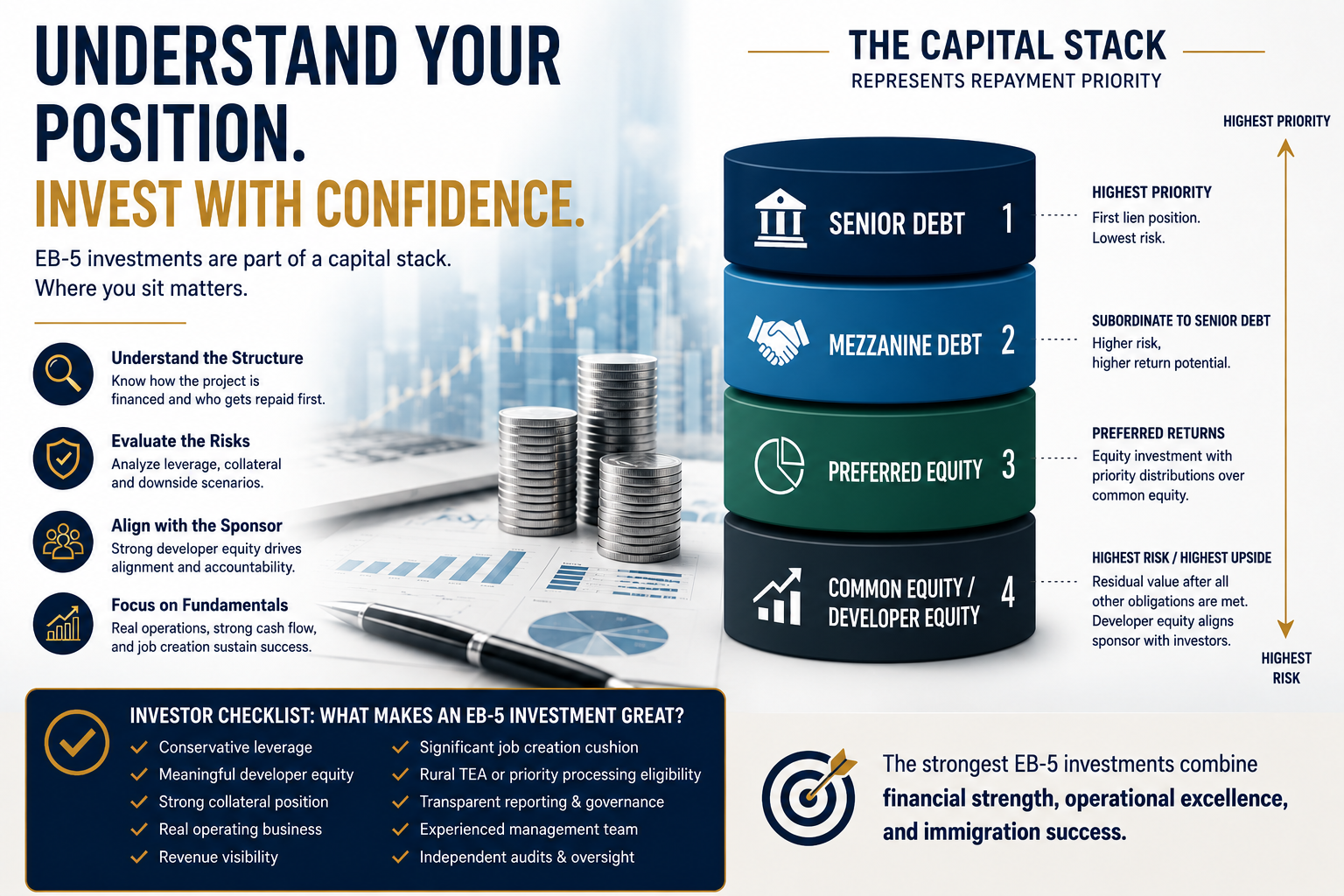
Every EB-5 investment exists within a broader capital stack — a layered financing structure that determines who gets repaid first, who controls the project during distress, and how protected investors may be during downside scenarios.
Understanding this structure matters.
At the top of the capital stack is typically senior debt — usually bank financing secured directly by the project assets. Senior lenders are generally repaid first and often maintain the strongest collateral protections.
Below that may sit mezzanine debt, a higher-risk layer positioned between the bank loan and equity. Mezzanine financing can become vulnerable during economic downturns because it is subordinate to senior lenders but still dependent on project performance.
Further down may be preferred equity, which often gives investors priority distributions over common equity holders but remains subordinate to debt. Importantly, “equity” does not automatically mean strong upside or strong protection.
One of the most important factors sophisticated investors should evaluate is developer equity — the sponsor’s own capital invested into the project. Meaningful developer equity creates stronger alignment because the sponsor has substantial capital at risk alongside investors.
Another critical concept is the intercreditor agreement, which governs how lenders interact if the project encounters financial distress. These agreements can determine who controls remedies, refinancing, foreclosure rights, and restructuring decisions.
Why does all of this matter?
Because downside scenarios happen.
Construction delays, refinancing challenges, rising interest rates, declining real estate values, or weaker-than-expected revenues can materially impact repayment outcomes. In those moments, repayment priority and collateral positioning become far more important than marketing materials.
Sophisticated EB-5 investors should evaluate:
- overall project leverage
- sponsor equity contribution
- collateral coverage
- revenue visibility
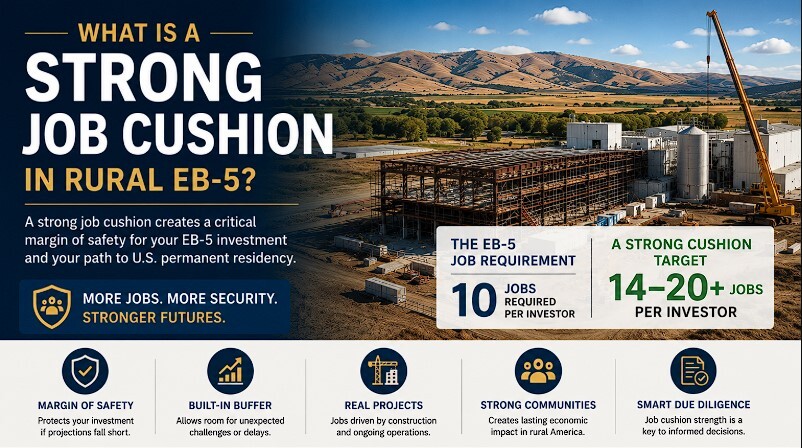
- job creation cushion
- construction progress
- and operational transparency
The strongest EB-5 projects are often those where immigration strategy, operational execution, and capital structure alignment work together cohesively.
At the end of the day, EB-5 is not simply an immigration process — it is a real capital markets transaction. Understanding where you actually sit within the structure may be one of the most important due diligence steps an investor can take before subscribing to any project.
What is the capital stack in an EB-5 investment?
The capital stack refers to the different layers of financing used within a project, including senior bank loans, mezzanine debt, preferred equity, developer equity, and EB-5 capital. Each layer carries different repayment rights, risk levels, and collateral protections. Understanding where EB-5 investors sit within the capital stack is critical when evaluating repayment visibility and downside protection.
Why does senior debt matter in an EB-5 project?
Senior debt is typically the first-position bank financing secured directly by the project assets. Senior lenders are generally repaid before mezzanine lenders, preferred equity holders, or EB-5 investors in downside scenarios. Investors should evaluate how much senior debt exists ahead of the EB-5 investment and whether the project maintains conservative overall leverage.
What is developer equity and why is it important for EB-5 investors?
Developer equity refers to the sponsor’s own capital invested into the project. Meaningful developer equity demonstrates stronger alignment between the sponsor and investors because the developer also has substantial capital at risk. Projects with low sponsor equity contributions may create weaker incentive alignment and higher structural risk.
What happens to EB-5 investors during a downside scenario?
If a project experiences construction delays, refinancing challenges, declining revenues, or economic downturns, repayment priority becomes extremely important. Senior lenders are typically repaid first, while EB-5 investor recovery depends heavily on remaining collateral value, project leverage, sponsor support, and overall capital structure strength.
What should sophisticated investors evaluate before selecting an EB-5 project?
Sophisticated EB-5 investors should evaluate:
-overall project leverage
-sponsor equity contribution
-collateral position
-job creation cushion
-construction progress
-revenue visibility
-repayment strategy
-fund administration or audit structure
-and whether the business demonstrates real operational activity rather than speculative assumptions
Understanding both the immigration and financial structure of an EB-5 investment is essential before subscribing to any project.
.png?width=1906&height=652&name=Logo%20Pill%20Blue%20(2026_03_27%2017_45_45%20UTC).png)